What is a pre-purchase car inspection and why it matters in Singapore
Buying a used car in Singapore is a significant financial commitment. Beyond the purchase price, you are taking on COE value, depreciation exposure, and future maintenance costs. A pre-purchase car inspection is one of the most important safeguards you can take before signing on the dotted line.
Here’s what it is, what it covers, and why it matters, especially in Singapore’s context.
What is a pre-purchase car inspection?
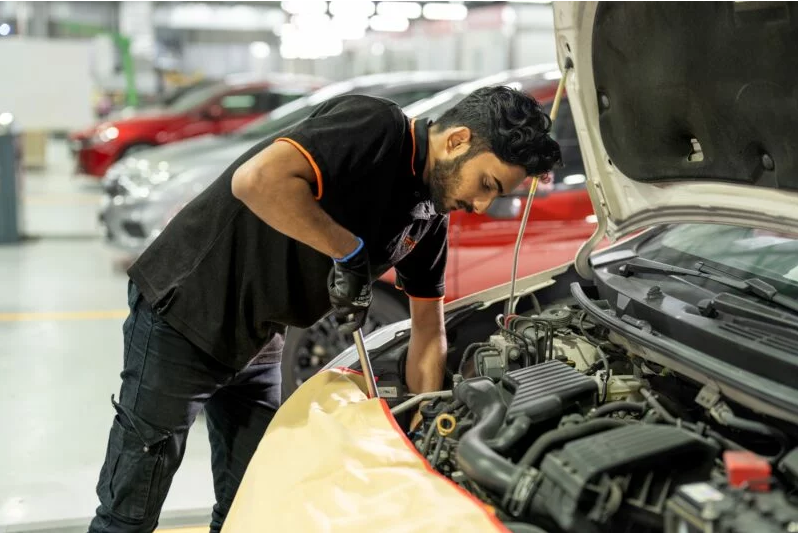
A pre-purchase inspection is a comprehensive mechanical and structural assessment of a used vehicle conducted before ownership transfer. It is typically performed by an independent workshop or an authorised inspection centre.
The goal is simple:
To identify hidden defects, accident damage, wear-and-tear issues, or potential repair costs before you commit to buying the car.
In Singapore, where used cars can cost tens of thousands of dollars even with only a few years of COE left, skipping this step can be costly.
Why does a pre-purchase car inspection matter more in Singapore
In many countries, a faulty car can simply be scrapped at relatively low cost. In Singapore, the financial stakes are different because:
COE value is significant
Part of what you are paying for is the remaining COE lifespan. Mechanical issues reduce the real value of that remaining tenure.
Depreciation is compressed
With only 5 to 10 years per COE cycle, unexpected repairs eat directly into your effective cost of ownership.
Check out our COE bidding and results page here.
High repair labour costs
Workshop labour rates in Singapore are not cheap. A gearbox or suspension overhaul can cost several thousand dollars.
Strict roadworthiness standards
Singapore’s inspection regime is stringent. If a vehicle has underlying issues, it may fail its periodic inspection, leading to further rectification costs.
Because of these factors, even small hidden defects can have a disproportionate financial impact.
What does a proper vehicle inspection check for?
A thorough pre-purchase inspection in Singapore goes beyond a quick visual check. It is a systematic evaluation designed to uncover mechanical wear, hidden accident damage, and potential high-cost repairs before ownership transfer. Below is a deeper look at what each area typically covers and why it matters.
Engine and gearbox condition
The technician will look for oil seepage around the valve cover, oil pan and gearbox housing, and listen for knocking, ticking or whining noises during cold start and under load.
They will also assess idle stability, throttle response and exhaust smoke. For automatic transmissions, they check for slipping, jerky engagement or delayed shifts. For manual cars, clutch bite point and synchro smoothness are evaluated. These indicators help determine whether major wear or costly repairs may be approaching.
Chassis and structural integrity
Inspectors will often examine the chassis rails, strut towers and weld points for signs of straightening or patchwork repairs. Uneven panel gaps, overspray in door jambs and inconsistent paint thickness can indicate previous collision damage.
The goal is to confirm that the car’s structural integrity has not been compromised, as major chassis repairs can affect safety, resale value and long-term durability.
Suspension and undercarriage
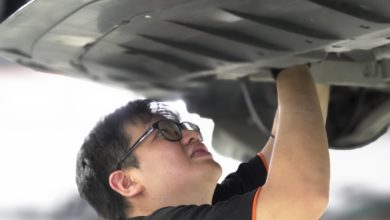
A lift inspection allows assessment of the vehicle’s control arms, bushings, stabiliser links and absorbers for cracks, leaks or excessive play. Check for rust, impact damage or bent components underneath will also be carried out.
In Singapore, frequent driving over speed bumps and potholes can accelerate suspension wear. Worn components may not be obvious during a short test drive but can result in uneven tyre wear, poor handling and additional repair costs.
Brake system
Brake pads and discs are measured for remaining thickness and surface condition. Inspectors look for scoring, warping or uneven wear on rotors, as well as signs of fluid leaks around calipers.
A road test confirms brake bite, pedal feel and vibration under braking. Since brake replacement costs can add up quickly, knowing their remaining lifespan helps buyers budget realistically.
Electrical systems
Modern vehicles rely heavily on electronics. The inspection covers air-conditioning performance, infotainment functionality, power windows, central locking, sensors and dashboard warning lights.
Faulty modules or sensor failures can be expensive, especially in continental or hybrid vehicles. Ensuring all systems function properly reduces the risk of unexpected repair bills after purchase.
Tyres and wear indicators
Inspectors measure tread depth and examine wear patterns. Uneven wear on the inner or outer edges can indicate poor alignment, worn suspension parts or previous accident damage.
Tyre age is also checked, as older tyres may harden even if tread depth appears acceptable. Replacement of all four tyres can be a significant upfront cost, so this forms an important part of the assessment.
OBD diagnostic scan
A diagnostic scan connects to the car’s onboard computer to retrieve stored fault codes. Some issues may not trigger a visible warning light but are recorded in the system history. The scan can reveal intermittent engine faults, transmission errors or sensor irregularities.
In Singapore, where cars are highly regulated and inspections are strict, identifying hidden electronic issues early provides critical transparency before committing to the purchase.
Common issues pre-purchase inspections uncover
Even well-presented cars can hide problems. Some common findings include:
- Accident repairs not declared by seller
- Oil leaks from engine seals
- Worn suspension components
- Air-conditioning compressor weakness
- Uneven tyre wear from poor alignment
- Battery or alternator nearing failure
Without inspection, these costs become your responsibility after transfer.
Dealer inspection vs independent inspection
Many dealers provide their own inspection reports. While this is helpful, buyers often choose to add an independent inspection for neutrality.
The difference lies in perspective:
Dealer inspection
Usually structured and comprehensive, especially from reputable platforms. May come with warranty coverage.
Independent inspection
Provides third-party validation with no sales interest involved.
In Singapore’s competitive used car market, combining a trusted seller with transparent inspection reporting offers the strongest protection.
When should you definitely do one?
A pre-purchase inspection is especially important if:
- The car has had multiple previous owners
- There is an incomplete service history
- The price seems unusually low
- The vehicle was previously used for private hire
- The remaining COE is short, and depreciation is high
These factors increase risk exposure and justify deeper due diligence.
How much does a car inspection cost in Singapore?
Vehicle inspection costs typically range from around $150 to $300, depending on vehicle type and depth of checks.
Compared to potential repair bills running into thousands, this is a relatively small investment for risk mitigation.
What happens after the inspection?
Once you receive the inspection report, you can choose to:
- Review highlighted defects;
- Request repair quotations;
- Negotiate the purchase price if necessary; or
- Walk away if major structural damage is detected
The inspection gives you leverage and clarity. It shifts the transaction from emotional decision-making to data-driven evaluation.
Does an inspection guarantee a perfect car?
No inspection can predict every future failure. Wear-and-tear components like batteries or bushings may still fail later.
However, it significantly reduces the risk of buying a car with hidden structural damage, major mechanical issues, or neglected maintenance.
Think of it as reducing uncertainty rather than eliminating it entirely.
Why buying from Carro gives you added assurance
If you’re buying a Carro Certified Car, much of this due diligence has already been done for you. At Carro Singapore, every certified vehicle undergoes a comprehensive 160-point inspection conducted by trained professionals before it is listed for sale. The inspection covers key mechanical components, structural integrity, safety systems and electronics to ensure the car meets strict quality standards.
Importantly, the full inspection report is made available online for transparency. This means you can review the vehicle’s condition, understand any findings, and make an informed decision even before arranging a viewing or test drive. In addition, Carro Certified Cars come with warranty coverage and return assurance, giving buyers an added layer of protection in Singapore’s high-cost ownership environment.

So is a pre-purchase car inspection worth your while?
In Singapore, buying a used car is not just about the sticker price. It involves COE value, depreciation, regulatory compliance, and long-term maintenance costs.
A pre-purchase car inspection provides transparency at a critical decision point. It helps you understand the true condition of the vehicle, assess future repair exposure, and negotiate from a position of knowledge.
For most buyers, especially first-time owners or those purchasing higher-value vehicles, a pre-purchase inspection is not an optional extra. It is a practical step that protects both your finances and your peace of mind.
For peace of mind, browse all available cars on Carro here.