
What to Expect During Your VICOM or STA Car Inspection
If you've just received an LTA inspection notice in the mail, you're not alone in wondering what actually happens when you drive into one of those inspection lanes. For first-time car owners especially, the process can seem opaque, but it's actually straightforward once you know what to expect.
This guide walks you through everything you need to know: when you need to go, what gets checked, how the three inspection operators compare, and how to make sure your car passes the first time.
Why Does Singapore Require Periodic Car Inspections?
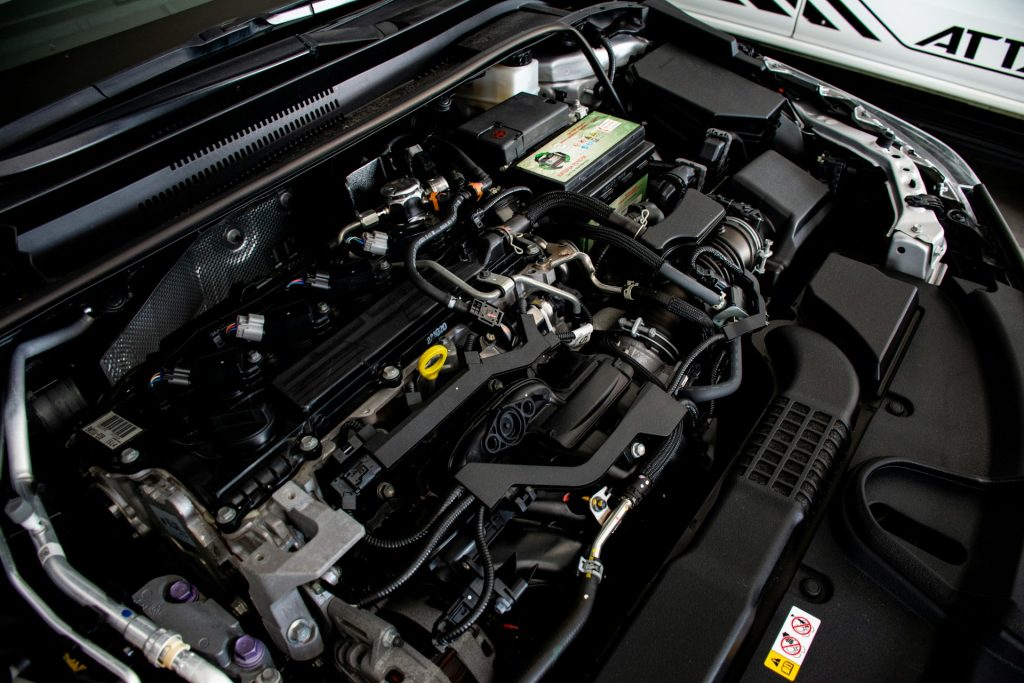
All vehicles on Singapore roads must undergo periodic inspections at an LTA-Authorised Inspection Centre (AIC). It ensures every car on the road meets minimum safety and emissions standards. An uninspected or unroadworthy car is not just a legal liability, driving one can result in a fine of up to $200 under the Road Traffic Act.
LTA will send you a notification about three months before your car is due for inspection, so you'll have plenty of time to prepare.
Where Can You Go?
There are three LTA-authorised inspection operators in Singapore: VICOM (7 centres, part of ComfortDelGro), STA (4 centres, part of ST Engineering), and JIC (1 centre, part of the VICOM Group). All three follow the same LTA inspection standards, so there is no difference in what gets checked or how strictly it is assessed. The main differences are location, payment methods, and booking options.
| Locations | Payment | Bookings | |
| VICOM | Sin Ming, Bukit Batok, Kaki Bukit, Changi, Clementi, Havelock, Yishun | Cash, NETS, PayNow, Diners | Priority booking available (prepayment required) |
| STA | Sin Ming, Jalan Boon Lay, Kaki Bukit, Carros Centre (Ubi) | Cash, NETS, Visa, Mastercard, PayNow | Time slot bookings available |
| JIC | Jalan Papan (Jurong) | Cash, NETS, Diners | Priority booking available (prepayment required) |
Note: STA is the only operator that accepts standard credit cards (Visa/Mastercard). VICOM and JIC accept Diners, a charge card that's less commonly held. If you're paying by card and don't have a Diners card, STA is the most convenient option.
How Much Does It Cost?
Fees are standardised across all three operators:
- Standard petrol or EV car: $68.67 (inclusive of GST)
- VExpress priority lane (at VICOM’s Sin Ming and Yishun branches only): additional $10.90
- High Idle Emission Test (required for most petrol cars registered after 1 April 2024): $7.63
- Re-inspection: $34.34
- Diesel Smoke Test (CDST): Additional $21.80
For most drivers, the all-in cost without any add-ons works out to be $76.30.
Check the latest fee breakdown directly on the VICOM website before you go, as fees are updated periodically.
How Often Does Your Car Need to Be Inspected?
Inspection frequency depends on your car's age:
- Under 3 years old: No inspection required
- 3 to 10 years old: Once every 2 years
- Above 10 years old: Once a year
If you're using your car as a Private Hire Vehicle (PHV) for Grab or Gojek, the rules are different. As of January 2025, LTA updated the PHV inspection schedule:
- PHVs under 10 years old: Annual inspection
- PHVs above 10 years old: Every 6 months (previously annual)
Taxis also saw a change: those under 3 years old now require annual inspections, down from every 6 months previously.
The older the car, the more frequently it needs to be checked, which is a factor worth considering when deciding whether to renew your COE or upgrade.
What Gets Checked During the Inspection?
The inspection covers six main areas, all assessed against LTA standards:
1. Structural integrity: The chassis and frame are checked to ensure the car's core structure is sound. This is particularly important for older cars or those that have been in accidents.
2. Wheel system: Tyres, suspension, shock absorbers, wheel bearings, and alignment. Tyres must have a minimum tread depth of 1.6mm and be free from cracks, bulges, or uneven wear. This is one of the most common reasons cars fail inspection.
3. Braking system: Service and parking brakes are tested for responsiveness, balance, and efficiency.
4. Steering system: Drive shafts and steering components are checked for stability and control.
5. Vehicle body and safety equipment: Seat belts, windscreen condition, door latches, hinges, lights (headlights, brake lights, indicators), and horn. All must be functioning correctly.
6. Emissions: All cars undergo an exhaust emission test. Cars registered after 1 April 2014 are additionally required to pass a Hydrocarbon Emission Test and a High Idle Emission Test. Diesel cars must also undergo a Chassis Dynamometer Smoke Test (CDST), which takes longer and costs an additional fee.
Note: EVs are exempt from all emissions tests but still undergo all the same structural, safety, and mechanical checks as any other car. Inspectors will pay particular attention to EV’s high-voltage system components, including cable insulation and the underbody battery casing.
How Long Does It Take?
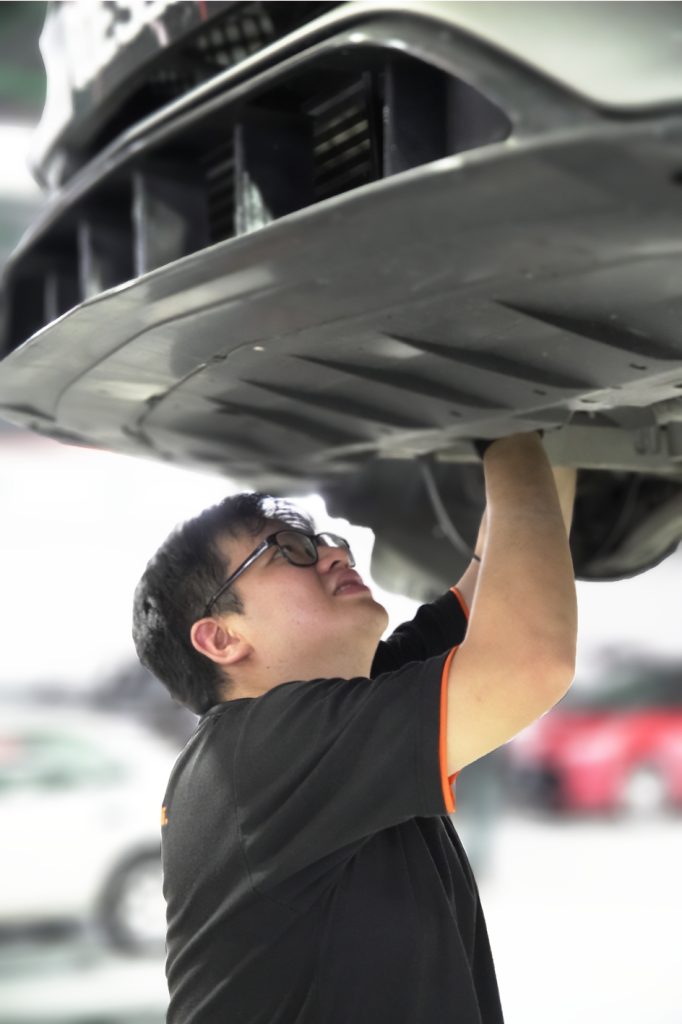
The actual inspection takes less than 15 minutes for a petrol, hybrid and EVs. Diesel cars take longer (around 20 mins) due to the additional CDST required.
The waiting time, however, can vary. The busiest period is typically between 11am and 2pm on weekdays. If you go early (before 10am) or later in the afternoon, queues are usually shorter. VICOM centres at Sin Ming and Bukit Batok also offer extended hours until 8pm on weekdays if you need to go after work.
To reduce waiting time, VICOM and JIC allow priority bookings with online prepayment, while STA allows time slot bookings. VICOM's prepayment is valid for up to 60 days from the date of payment, so you can lock in your slot well ahead of time.
If you want to skip the queue entirely, VICOM offers VExpress, a dedicated priority lane for an additional $10.90 on top of the standard inspection fee. It's available at Sin Ming and Yishun only, and slots are limited, so book ahead if you plan to use it.
As a rule of thumb, don't leave it until the last week before your inspection deadline because if your car fails and needs a re-inspection, you'll want enough time to get the issues fixed and return without rushing.
Is Your Car Ready for Inspection? What to Check and What Commonly Fails
Most drivers pass their inspection without issues, but the ones who don't usually fail on the same few items. Here's what inspectors look for, and how to check each one yourself before you go.
| What's being checked | How to check it yourself |
| Tyres | Look for small rubber bumps moulded into the tyre grooves: these are wear indicators. If the tread surface is level with these bumps, your tyres are at or near the 1.6mm legal minimum and need replacing. Also, check the smooth side surface of the tyre for any cracks or bulges. |
| Lights | Have someone stand outside the car while you turn on headlights, press the brake pedal, flick each indicator, and engage reverse. A single blown bulb is enough to fail so all lights need to be working. |
| Brakes | Listen for squealing or grinding when you brake, and notice if the car pulls to one side or takes longer to stop than usual. Any of these signs mean your brake pads likely need replacing. |
| Emissions | No easy visual check, but getting an oil change and air filter replacement beforehand significantly improves your chances of passing. |
| Windscreen | Sit in the driver's seat and look through your natural line of sight. Any chips or cracks in that zone need to be addressed before inspection. |
| Seat belts | Pull each belt out fully and let go. It should retract smoothly with no snagging. |
| Horn | Give it a quick press. It should sound immediately and clearly. |
| Engine warning light | Check your dashboard before driving to the inspection centre. If any warning light is on, get it diagnosed first. |
If your inspection uncovers issues, or if you want to get your car serviced beforehand to avoid emissions failures, Carro Care is our in-house workshop with 100% transparent pricing and experienced mechanics. Book a service before inspection day and go in with confidence.
Read more: When Should you Service your Car?
What About the Vehicle Evaluation (VFIT/STAI)?
The periodic inspection described above is the mandatory LTA inspection for roadworthiness. There is a separate, optional service called a vehicle evaluation, offered by VICOM as VFIT and by STA as STAI. These are specifically designed for used car buyers.
A vehicle evaluation is not required by law, but it is strongly recommended by CASE (Consumers Association of Singapore) before buying any used car. It goes deeper than the periodic inspection, covering the car's condition from a buyer's perspective, including any accident damage, hidden defects, or issues that would affect the car's value. You'll receive a written report highlighting any problems found.
If you're buying through Carro, this step is already taken care of. Every Carro Certified Pre-Owned (CCPO) car comes with a 160-point inspection report as standard (covering mechanical condition, accident history, and safety systems) so you know exactly what you're getting before you commit.
You've read to the end. Now go book your inspection.
The periodic car inspection is one of those things that sounds more intimidating than it is. With a basic pre-inspection check and a reasonably well-maintained car, most drivers pass without issue. The whole process, excluding waiting time, takes under 15 minutes.
Whether you're due for inspection soon or just want to keep your car in good shape year-round, Carro Care is our in-house servicing workshop, with 100% transparent pricing, and a team of expert mechanics.

Quick FAQs: Car Inspection in Singapore
Q: When does my car need to go for inspection in Singapore?
A: Cars under 3 years old don't need inspection. Cars between 3 and 10 years old are inspected every 2 years. Cars above 10 years old must be inspected annually. LTA will send you a notice about 3 months before your due date.
Q: What's the difference between VICOM, STA and JIC?
A: All three follow the same LTA inspection standards – there is no difference in what gets checked. The main practical differences are location, payment options (STA accepts Visa and Mastercard; VICOM and JIC do not), and booking methods. Choose based on what's most convenient for you.
Q: What happens if my car fails the inspection?
A: You'll be told on the spot which items failed. After getting them fixed at any approved workshop, you return for a re-inspection. Re-inspection fees apply. Most common failures (tyres, brakes and lights) are straightforward to fix.
Q: Do I need to book an appointment for VICOM or STA?
A: No appointment is required. You can walk in at any time during operating hours. However, VICOM and JIC offer priority bookings (with prepayment) and STA offers time slot bookings to reduce waiting time. Avoid the 11am–2pm peak period if you want a shorter queue.
Q: What is a vehicle evaluation and is it different from an inspection?
A: Yes, they're different. The periodic inspection is a mandatory LTA roadworthiness check. A vehicle evaluation (VFIT by VICOM or STAI by STA) is an optional, more detailed assessment recommended for used car buyers. It covers condition, hidden defects, and accident history, and produces a written report.
Q: Is a car inspection the same at all three centres?
A: Yes. VICOM, STA, and JIC all follow the same LTA inspection checklist and standards. The outcome of your inspection will not differ based on which centre you go to.