
Should you renew your COE or sell your car?
Buying a car in Singapore is a long-term financial commitment, and sooner or later every owner faces the same decision point: should you renew your COE or sell your car and move on to something newer?
There is no one-size-fits-all answer. The right choice depends on costs, condition, driving needs, and your long-term plans. This guide breaks the decision down into simple, practical steps so you can assess your options confidently.
Read more: Latest COE Prices & COE Bidding Results
How COE renewal works

When a car reaches ten years old, you can choose to renew the Certificate of Entitlement for either:
- 5 years (short renewal, also called a “half COE renewal”) At the end of this period, the car must be deregistered and scrapped; there is no scrap value.
- 10 years (full renewal) This allows you to continue using the car for another decade.
You will pay the Prevailing Quota Premium (PQP), which is the moving average of COE prices over the last three months. PQP changes every month and can be lower or higher than current bidding prices.
Once renewed, your car effectively starts a new COE cycle. Important: If you opt for a 5-year renewal, you cannot extend or renew the COE again after it expires; the vehicle must be deregistered at the end of that period.
When renewing your COE makes sense
Renewing makes financial sense when you meet most of these conditions:
1. The car is reliable and well-maintained
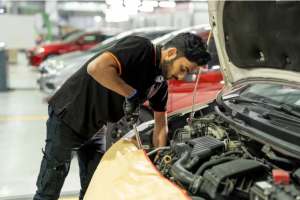
If your car has a strong maintenance history, low mechanical issues, and parts are still easily available, keeping it for another 5 or 10 years can be cost-efficient. Japanese models like Honda and Toyota, for example, tend to age well and remain dependable with proper servicing.
2. When PQP is relatively low
Renewing your COE becomes more cost-effective when the Prevailing Quota Premium (PQP) is lower than recent highs. A lower PQP reduces the upfront renewal cost and improves the overall value of keeping your car.
3. Your annual mileage and usage are stable
If you drive regularly but not excessively, renewing your COE can help you spread out your ownership costs without taking on significant additional risk.
4. You prefer minimal upfront cost
Purchasing a replacement car comes with significant upfront expenses, including:
- Downpayment
- New COE
- Higher depreciation
Renewing your existing COE lets you avoid these costs while keeping your current car on the road.
When you should consider selling your car

Selling may be the better option when one or more of these conditions apply:
1. High upcoming repair costs
Older cars may soon need major replacements such as engine mounts, gearbox repairs, suspension overhauls, air-conditioning systems, or electrical components. When these costs run into the thousands of dollars, it may no longer be financially sensible to renew the COE.
2. You want lower fuel consumption or newer safety tech
Cars have advanced significantly in the last decade. Newer models often offer:
- Better fuel efficiency
- Enhanced crash protection and safety features
- Advanced driver assistance systems
- Modern infotainment and connectivity
- Lower emissions
If these upgrades are important to you, selling your current car may be the more practical choice.
3. PQP is too high
When the Prevailing Quota Premium (PQP) approaches peak COE levels, renewing can become expensive. This reduces the cost-effectiveness of keeping your current car.
4. You plan to change lifestyle or driving habits
Your car choice should align with your long-term needs. Consider selling if you are:- Switching to an EV
- Downsizing to a smaller car
- Upgrading for family or lifestyle needs
Holding on to an older vehicle may no longer suit your future plans.
COE renewal vs selling: A quick cost comparison

A simple way to assess your decision:
1. Estimate your COE renewal cost
Use:
For a 10-year renewal: PQP × 1
For a 5-year renewal: PQP × 0.5
2. Estimate required repairs over the next 2–3 years
Consider likely maintenance or part replacements over the next 2–3 years. A workshop inspection can help provide accurate figures.
3. Compare with the cost of a replacement car
A new car usually has higher depreciation but may offer better reliability, fuel efficiency, and lower repair costs.
If your total renewal cost plus expected repairs is significantly lower than the depreciation of a new car, renewing your COE is often the more cost-effective choice.
A practical way to decide
Use this simple framework to guide your choice:
Choose COE renewal if you want:
- Lower upfront cost
- A reliable car you know well
- To avoid the high depreciation of newer cars
- To maximise value from your current vehicle
Choose to sell if you want:
- Better safety and comfort features
- Improved fuel efficiency or lower maintenance
- To upgrade your lifestyle or vehicle type
- To avoid costly upcoming repairs
Thinking of selling your car instead?
If you choose not to renew your COE, selling your car before expiry can often be more advantageous. Well-maintained pre-expiry cars remain in high demand, and selling early helps you avoid costly repairs down the line.
Carro can help you:
- Get a fair market valuation
- Sell quickly with minimal paperwork
- Receive fast and secure payment
If you’re ready to explore selling your car or want to compare your options, Carro can support you through a smooth, transparent process.


