
Car Reviews
EV vs hybrid cars in Singapore: Which one makes more sense for you?
Electric vehicles (EVs) have been gaining attention and traction in Singapore, but hybrid cars haven’t been left behind either. With both types now widely available and backed by government incentives, the decision to go fully electric or stick with a hybrid isn’t always straightforward. Whether you’re looking for long-term savings, convenience, or environmental benefits, the best choice really depends on your particular driving lifestyle and priorities.
Let’s compare EVs and hybrids based on what matters most to Singaporean drivers today.
 Tesla Model 3 Electric RWD going for $190,888 on Carro!
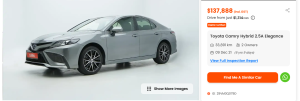 A Toyota Camry Hybrid 2.5A Elegance going for $137,888 on Carro!
There are also plug-in hybrid electric vehicles (PHEVs), but in Singapore, traditional hybrids are still more popular due to lower upfront costs and no need for home charging.
A Toyota Camry Hybrid 2.5A Elegance going for $137,888 on Carro!
There are also plug-in hybrid electric vehicles (PHEVs), but in Singapore, traditional hybrids are still more popular due to lower upfront costs and no need for home charging.
 A Toyota Corolla Cross Hybrid 2.0A Premium going for $145,888 on Carro!
 Souce
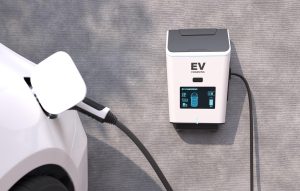
A big part of choosing an EV is your access to charging points.
EV charging stations are growing quickly in Singapore, with the government targeting 60,000 public chargers by 2030. Still, EVs make the most sense if you have easy access to private or workplace parking with chargers. If you rely on public parking or live in older HDBs without EV-ready lots, managing your charging will be less convenient.
For hybrid owners, there’s no need to worry about charging infrastructure — just fuel up and go. That’s still a big draw for drivers who want efficiency without changing their routine.
Souce
A big part of choosing an EV is your access to charging points.
EV charging stations are growing quickly in Singapore, with the government targeting 60,000 public chargers by 2030. Still, EVs make the most sense if you have easy access to private or workplace parking with chargers. If you rely on public parking or live in older HDBs without EV-ready lots, managing your charging will be less convenient.
For hybrid owners, there’s no need to worry about charging infrastructure — just fuel up and go. That’s still a big draw for drivers who want efficiency without changing their routine.
How they work: The basics
Before diving into costs and features, here’s a brief and basic breakdown of how both types differ:- EVs (Electric Vehicles) run solely on electricity. You charge the battery through a charging station, and there’s no petrol tank or engine noise involved.
Tesla Model 3 Electric RWD going for $190,888 on Carro!
- Hybrid cars run on both petrol and electricity. They use an internal combustion engine and a small electric motor that supports acceleration, reduces fuel use, and charges itself as you drive. This is also known as a self-charging hybrid.
A Toyota Camry Hybrid 2.5A Elegance going for $137,888 on Carro!
There are also plug-in hybrid electric vehicles (PHEVs), but in Singapore, traditional hybrids are still more popular due to lower upfront costs and no need for home charging.
Cost of ownership: Upfront and long-term
Here’s where many buyers start when comparing the two. The price you pay upfront and what you spend over the years can differ quite a bit.- EV upfront cost:
- Hybrid upfront cost:
A Toyota Corolla Cross Hybrid 2.0A Premium going for $145,888 on Carro!
- Maintenance:
- Fuel and charging:
The charging reality in Singapore
Souce
A big part of choosing an EV is your access to charging points.
EV charging stations are growing quickly in Singapore, with the government targeting 60,000 public chargers by 2030. Still, EVs make the most sense if you have easy access to private or workplace parking with chargers. If you rely on public parking or live in older HDBs without EV-ready lots, managing your charging will be less convenient.
For hybrid owners, there’s no need to worry about charging infrastructure — just fuel up and go. That’s still a big draw for drivers who want efficiency without changing their routine.
Driving experience and performance
EVs are known for smooth, silent acceleration and instant torque. They’re ideal for city driving, where stop-and-go traffic is common. Hybrids offer a more familiar experience and run quietly at low speeds, switching to petrol power for extra acceleration or highway driving. For most Singapore commutes - short distances and heavy congestion - both types perform well. But if you drive long distances frequently or plan road trips to Malaysia, hybrids offer flexibility without needing to plan for charging stops. Related article: VEP Update: Malaysia to enforce the Vehicle Entry Permit (VEP) for all foreign-registered vehicles.Environmental impact
Both EVs and hybrids offer much cleaner alternatives to petrol cars.- EVs have zero tailpipe emissions, though their environmental benefit depends on how electricity is generated.
- Hybrids cut emissions significantly but still rely partly on fossil fuels.
Which one is right for you?
- Choose an EV if: You have regular access to charging, drive mostly within Singapore, and want the lowest long-term running costs.
- Choose a hybrid if: You want fuel efficiency without changing your routine, often drive longer distances, or prefer a lower upfront cost.


